Jean César Reboul's Istanbul story begins not as a plan, but as a coincidence. The young Frenchman, who had just completed his pharmacy education in Paris, sets out to visit his father — an engineer working on the construction of the Hopa-Trabzon highway near Trabzon. His route passes through Istanbul.
As Reboul passes through Istanbul, he turns onto Rue de Pera in Beyoğlu. The street gives him pause. The Pera of that era is the most cosmopolitan, vibrant, and commercially active point of the Ottoman capital. Straddling the threshold between East and West, the street feels both familiar and new to an entrepreneurial mind trained in Paris. Reboul makes a decision: he will go to Trabzon, visit his father, and upon his return, settle in Istanbul.
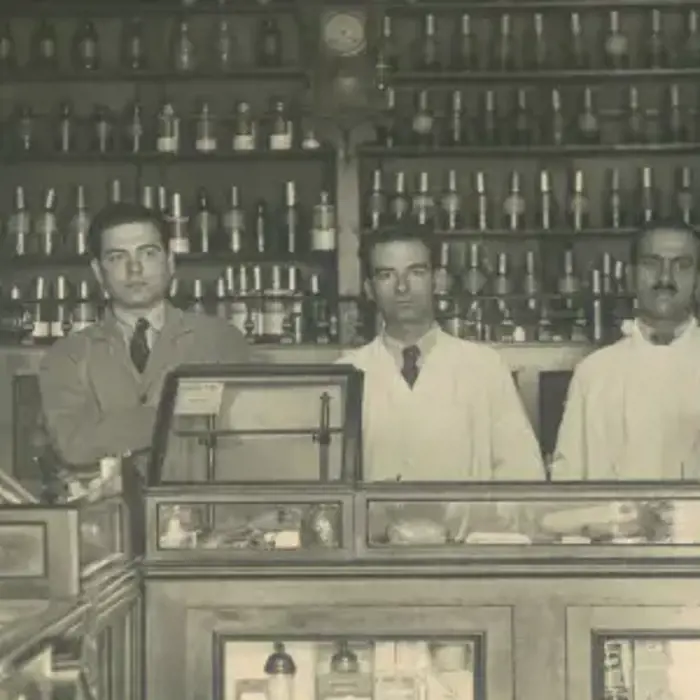
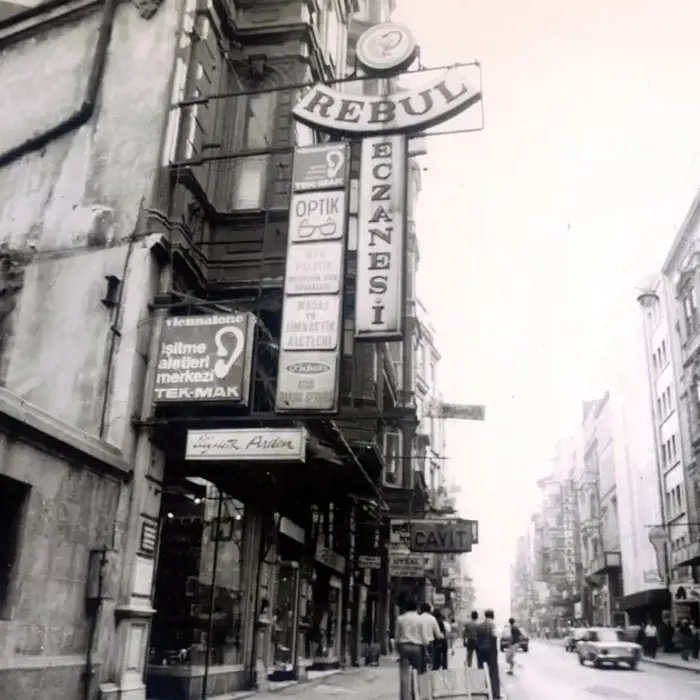
In 1895, he opens Grande Pharmacie Parisienne — the Great Paris Pharmacy — on Rue de Pera. One of the first pharmacies in Turkey, this establishment would bear witness to the final years of the Ottoman Empire and continue to exist at the same address for generations to come.
Pharmacist or Formulator?
What sets Reboul apart from the ordinary pharmacists of his era is his refusal to see the pharmacy as merely a point of sale. The small laboratory he establishes in the basement reflects his true passion: formulation.
At a time when access to imported products in Pera was limited, Reboul begins crafting his own formulas. Face creams, tonics, lotions, and cologne-based products emerge from this laboratory. For Istanbul of that era, this approach is innovative — cosmetics are not yet produced in factories, but in the laboratories behind pharmacy counters.
The lavender plant Reboul cultivates in his garden becomes a symbol of this process. From lavender he harvests with his own hands, he extracts essential oils and formulates a cologne in the pharmacy's basement. In 1938, this cologne will take the name Rebul Lavanta and become one of Turkey's most iconic fragrance products.
Quality and trust are the most important legacy of the Rebul family.
— Jean César ReboulThe Bond with Kemal Müderrisoğlu
One of Reboul's most significant decisions in Istanbul comes in 1920, when he agrees to take on a young pharmacy student as an apprentice. Kemal Müderrisoğlu applies to Reboul that year, but his first application is rejected. He has not yet obtained his pharmacy degree, and his French is insufficient.
Kemal Müderrisoğlu does not step back. He enrolls in evening language courses at the French Consulate, completes his pharmacy education, and returns to Reboul with diploma in hand. This determination impresses Reboul, and he hires Kemal Müderrisoğlu.
What begins as a master-apprentice relationship evolves over time into a far deeper bond. Reboul's children have no interest in pharmacy. Kemal Müderrisoğlu, however, takes ownership of both the profession and the establishment. The two pharmacists work side by side — the Frenchman's scientific rigor intertwining with Kemal Müderrisoğlu's tenacity.
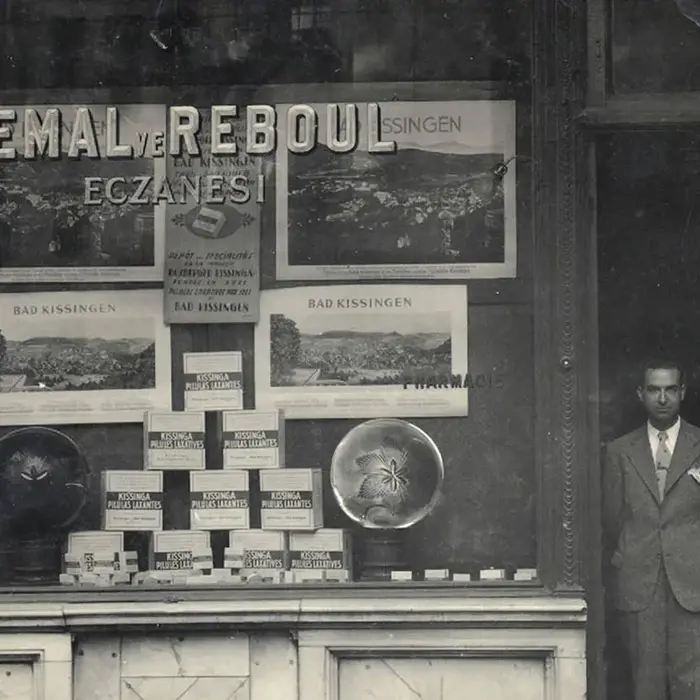
In 1936, Reboul invites Kemal Müderrisoğlu into a partnership. The pharmacy's name is changed to "Kemal ve Rebul Eczanesi" — Kemal and Rebul Pharmacy. This change is not merely a sign update; it symbolizes Reboul's trust and the gradual transition taking place.
Rebul Lavanta: A Legacy Born from a Garden
In 1938, Reboul formulates a new cologne using essential oils extracted from lavender he grows in his own garden. The product comes to life in the laboratory on the lower floor of Grande Pharmacie Parisienne. The gentlemen of Pera quickly embrace this scent. Wearing Rebul Lavanta before strolling through Beyoğlu becomes an urban tradition.
Rebul Lavanta gradually transcends the boundaries of a mere product. It becomes a habit passed down from father to son, a thread woven into Istanbul's collective olfactory memory. In 1981, it is awarded a gold medal by the International Beauty Products Quality Control Center.
When Reboul created this cologne, he could not have anticipated that his formula would one day become the emblem of a holding company. Yet the mark he left behind is not merely a recipe — it is the tangible expression of a personal devotion to quality.
1939: The Anatomy of a Farewell
In 1939, Reboul decides to leave the pharmacy where he has worked for 44 years and returns to France. He entrusts the establishment to Kemal Müderrisoğlu — the man he regarded as a son, and with whom he had worked side by side for decades.
Kemal Müderrisoğlu expresses his respect for his mentor in the most concrete way possible: he renames the pharmacy "Rebul Eczanesi" — Rebul Pharmacy. To adapt the name to Turkish pronunciation, he drops the letter "o" from Reboul; the brand name Rebul takes hold.
As he departs, Reboul leaves Kemal Müderrisoğlu with a single sentence: "Quality and trust are the most important legacy of the Rebul family." These words remain at the heart of Rebul Holding's corporate identity to this day.
Why It Still Matters
Jean César Reboul did not simply found a pharmacy. He founded a philosophy of pharmacy: to see formulation as a science, to hold quality as a non-negotiable standard, and to embrace the transmission of knowledge as a responsibility.
These three principles continue to live on — decades after his death — in Rebul Holding's approach to research and development, its discipline of certification, and its brand identity. The J.C.R. Signature Collection, launched in celebration of the 130th anniversary, takes its name directly from his initials. This tribute to the past, expressed through an amber-toned bottle, demonstrates that Reboul's legacy remains an active point of reference.
When you touch a Rebul or Atelier Rebul product today, you encounter the continuation of a philosophy of formulation that began in a small laboratory in Beyoğlu in 1895.